Recycling and Sustainability for House Clearance Willesden
House clearance in Willesden demands more than removal — it requires an ongoing commitment to creating an eco-friendly waste disposal area and a truly sustainable rubbish area for our community. Our Willesden house clearance teams follow a clear sustainability framework that prioritises reuse, repair and recycling ahead of disposal. We manage household clearances with careful segregation at source, salvaging items for donation, diverting recyclables to appropriate facilities and reducing landfill through targeted reuse programmes.Our measurable goal is explicit: recycling percentage target set at 70% by 2028 across all Willesden clearance operations. To reach this, we apply strict sorting protocols on-site and invest in training so crews can identify materials for reuse or recovery. Key actions include:
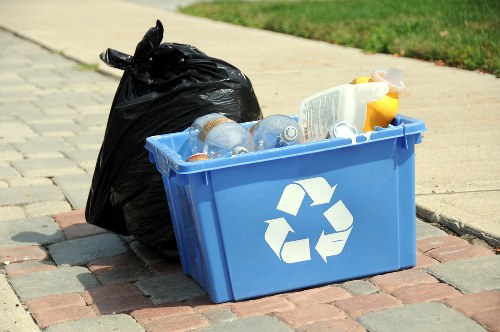 We work closely with the boroughs’ approach to waste separation: Brent and neighbouring councils increasingly emphasise separate streams for food waste, paper & card, glass, and mixed recyclables, along with specialised collections for textiles and small electricals. By aligning our Willesden clearance procedures with local authority guidance we ensure materials are directed to the right local facilities and Materials Recovery Facilities (MRFs), improving overall recovery rates and reducing contamination.
Partnerships with charities and reuse organisations are at the heart of our sustainable house clearance in Willesden. We collaborate with local furniture banks, community reuse centres and charitable outlets that accept good-condition furniture, clothing and household items. These partnerships with charities help keep usable items in circulation, support local social causes and reduce the carbon footprint of disposal. Items that can be refurbished are channelled to community projects, while working relationships with national and local charities ensure that large volumes of donations find an impactful second life.
Low-carbon vans and low-emission logistics
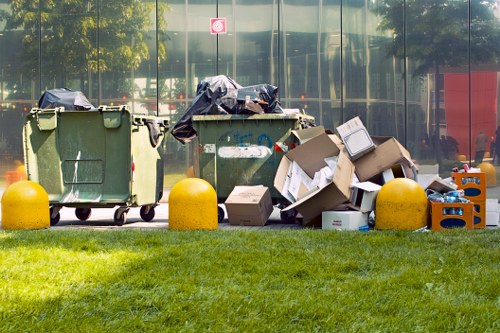
Our Willesden clearance service operates a modern fleet of low-carbon vans and hybrids, complemented by electric vehicles for short urban runs. Fleet choices and route optimisation software reduce emissions, while scheduled combined pick-ups minimise unnecessary miles. By prioritising low-emission transport we make the rubbish clearance process part of a broader carbon reduction strategy. Low-carbon vans are not just an operational detail — they are a visible commitment to cleaner streets and quieter, greener neighbourhoods.At the centre of our operations is a compact, well-organised eco-friendly waste disposal area where materials are pre-sorted before transfer. Bulky items are assessed: reusable pieces go to charity or resale partners, salvageable materials are stripped and recycled, and non-recyclable residues are processed through approved disposal routes. Electronics are handled separately and sent to certified WEEE processors; hazardous household chemicals are isolated and placed into authorised collection systems, ensuring regulatory compliance and community safety.
Local transfer stations and material flows
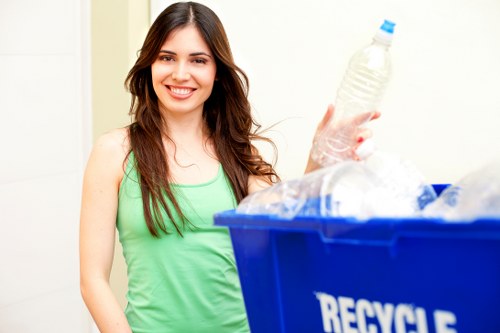
We direct segregated streams to local transfer stations and the North London network of recovery facilities that serve Willesden and Brent. By using nearby transfer stations we reduce haul distances and keep emissions down. These stations act as consolidation points where materials are sorted, baled and sent to specialist processors — glass to re-melters, paper to pulping mills, metals to smelters, and organics to AD or composting facilities. Our logistic choices ensure the sustainable rubbish area remains effective and traceable.Community engagement is central to long-term success. We run neighbourhood initiatives to explain how house clearances can contribute to a circular economy: clear labelling for separated bags, guidance on borough-specific recycling rules, and collaborative collection days with local groups. The boroughs’ approach to waste separation is evolving, and our teams provide practical support for residents, clarifying what belongs in food caddies, recycling sacks or hazardous waste collections so contamination is reduced and diversion rates improve.
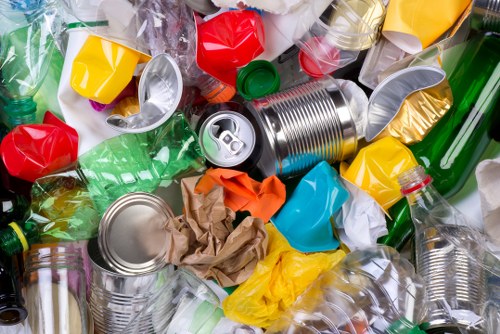 In summary, our Willesden clearance operations combine practical on-site sorting, robust partnerships with charities and reuse organisations, use of low-emission vans, and the strategic use of local transfer stations to meet hard targets. By aiming for a strong 70% recycling rate and continuously refining collection and transfer practices, we transform house clearance from a one-off chore into an opportunity to build a sustainable rubbish area that benefits people, places and the planet. For every Willesden house clearance job we undertake, the focus is clear: maximise reuse, drive recycling, cut carbon and support the local circular economy.