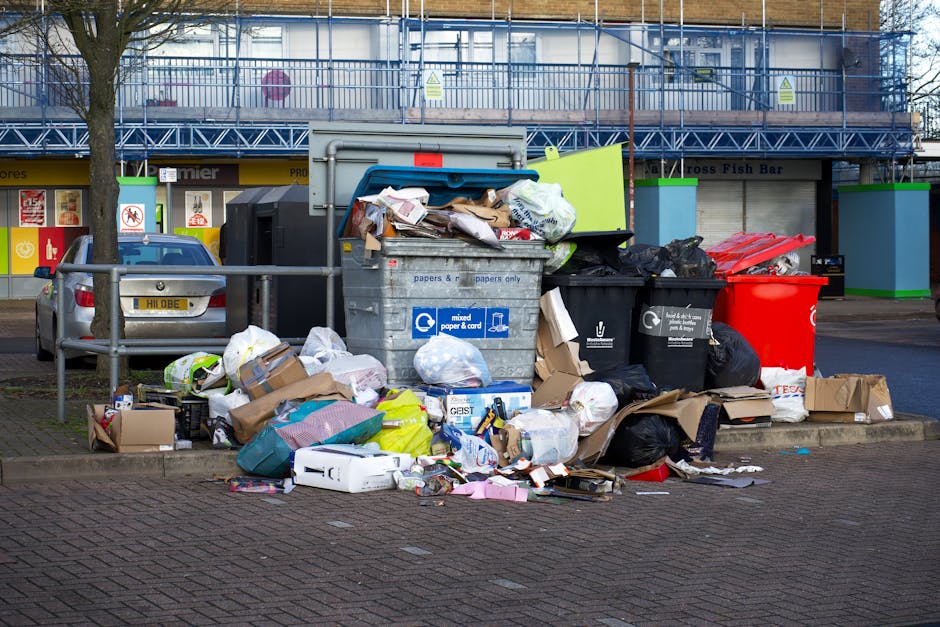
Common problems with access for Willesden rubbish jobs

If you have ever tried to book rubbish removal in a busy part of London, you'll know the job can be simple on paper and awkward in real life. In Willesden, access is often the detail that decides whether a clearance feels smooth or turns into a frustrating delay. Common problems with access for Willesden rubbish jobs can mean anything from narrow stairwells and tight hallways to parking restrictions, basement steps, low door frames, or a van that simply cannot get close enough to the property.
This guide breaks down the most common access issues, why they matter, and how to plan around them. It is written for homeowners, landlords, tenants, businesses, and anyone organising a local clearance who wants fewer surprises on the day. A little planning goes a long way here, and honestly, it saves everyone a headache.
Why Common problems with access for Willesden rubbish jobs Matters
Access is not just a small operational detail. It affects time, labour, safety, vehicle positioning, and the amount of lifting involved. In a place like Willesden, where streets can be busy and properties vary from terraced homes to flats above shops, the route from the front door to the truck can be the hardest part of the job.
When access is poor, crews may need extra time to carry items further, wait for parking, split the job into several trips, or work around neighbours and shared entrances. That can change the whole shape of the clearance. Even a simple sofa collection can become awkward if it has to come down a narrow staircase with a bend halfway.
It matters for the customer too. Better access planning usually means a cleaner finish, less disruption, and fewer surprises on the invoice. Nobody likes hearing, halfway through a job, that the van cannot park where expected. To be fair, that kind of thing happens more often than people think.
If you are comparing clearance options, it may help to look at the broader service you need, whether that is house clearance, flat clearance, or a more targeted waste removal job. Access affects all of them, just in slightly different ways.
How Common problems with access for Willesden rubbish jobs Works
Every rubbish job starts with a route. The crew needs to move waste from where it sits to where it can be loaded safely. If that route is clear, the job is straightforward. If the route is blocked, steep, narrow, shared, or time-sensitive, the work slows down.
Access problems usually show up in one of four places:
- Outside the property - parking, loading space, low-emission zone concerns, street width, or traffic.
- At the entrance - gates, intercoms, coded doors, narrow paths, garden walls, or low steps.
- Inside the property - tight staircases, awkward corners, fragile flooring, loft hatches, basements, or cluttered hallways.
- At the item itself - heavy furniture, broken appliances, builders' rubble, or bulky waste that needs two people rather than one.
A lot of people assume access is only about parking. Not really. A property can have decent roadside access and still be difficult if the rubbish is in a loft, a rear yard, or an upstairs office with a narrow turn at the landing. In practical terms, the crew has to match the item, the building, and the route together.
That is one reason specialist services such as loft clearance, garage clearance, garden clearance, and office clearance each need slightly different planning. One size rarely fits all. Buildings have a funny way of proving that.
Key Benefits and Practical Advantages
Good access planning does more than save a few minutes. It can improve the whole experience from first call to final sweep-up.
- Less lifting distance means faster work and less strain on the team.
- Lower disruption for neighbours, neighbours' cars, and shared hallways.
- Safer handling for heavy or awkward objects.
- More accurate quotes because the crew knows what they are walking into.
- Better scheduling when parking, access windows, or key collection are sorted in advance.
- Cleaner outcomes because the team can focus on removal rather than solving access puzzles on the spot.
There is also a calmer side to it. People often feel stressed before a clearance because they do not know whether everything will fit, whether the building is too awkward, or whether the waste can be removed without drama. A clear access plan takes that pressure down a notch. Nice, simple, reassuring. That matters.
If you want a better idea of service scope and what a job may involve, the information pages on home clearance and furniture disposal can help frame what needs moving, even before anyone arrives.
Who This Is For and When It Makes Sense
This guidance is useful if you are dealing with any of the following:
- a flat on an upper floor without a lift
- a maisonette with a shared staircase
- an office above a retail unit
- a rear garden with side access only
- builders' waste stacked in a tight front yard
- large furniture that must pass through narrow hallways
- a probate or home clearance where items are spread across several rooms
- an end-of-tenancy clearance where time is tight and the building is busy
It also makes sense for landlords and managing agents, because access usually affects building rules, noise control, lift use, and resident communication. In blocks of flats, one small detail can ripple through the whole job. A lift booked for the wrong hour can become a minor saga. No one wants that.
Business owners should pay attention too. For commercial sites, access may involve delivery bays, security check-in, opening hours, loading restrictions, and separate waste streams. If that sounds familiar, business waste removal is often the more suitable route than a general clearance.
Step-by-Step Guidance
If you want to reduce access problems before a rubbish job in Willesden, follow a simple process. It is not glamorous, but it works.
- Walk the route first. Start at the rubbish and follow the path to the street or loading point. Notice narrow turns, steps, doors, low ceilings, and anything fragile.
- Check parking and stopping space. Decide where the van is likely to go, how far it will be from the property, and whether there is room for safe loading.
- Measure the awkward bits. If you have a sofa, mattress, wardrobe, or appliance, check door widths and stair turns. Even a few centimetres can matter.
- Identify obstacles. Look for bins, bikes, prams, planters, scooters, pet gates, loose rugs, and that one heavy chest of drawers that somehow ends up in the worst place.
- Tell the crew honestly. Mention stairs, parking limits, basement access, locked gates, long carry distances, and whether anything needs dismantling.
- Prepare the route. Move small items, unlock doors, clear hallways, and protect flooring if needed.
- Confirm timing. Access windows, concierge hours, school-run traffic, and business opening times can all change the best arrival slot.
- Keep a backup plan. If a van cannot get right outside, decide in advance where it can wait and who will guide the team.
A tiny bit of honesty at the start can save an hour later. "It's a bit tight round the back" is much more useful than pretending the path is wider than it is. Really, it is.
Expert Tips for Better Results
Here are the things that tend to make the biggest difference on awkward access jobs.
1. Describe the route, not just the rubbish
People often focus on what needs removing and forget how it gets out. A wardrobe is a wardrobe, but the route matters more if it has to be turned at the top of a spiral staircase. Mention the route, the floors, and any shared spaces.
2. Flag heavy items early
Items like American-style fridges, old ranges, cast-iron radiators, or waterlogged furniture may need extra manpower or different handling. If they are going down steps, say so. The same goes for bulky but fragile items like mirrors or glass tables.
3. Treat parking as part of the job
In London, parking is rarely "just there". A crew may need a short stay place, a loading bay, or a sensible drop-off point. If the van has to sit round the corner, the labour changes. That is normal, but it should be planned for.
4. Protect the building before movement starts
Hallways, bannisters, painted walls, and floors take the knocks. Good teams will be careful, of course, but it helps when the route is clear and furniture edges are not scraping past old plaster every few seconds.
5. Think about neighbours and shared access
One of the quieter access problems is people. Shared entrances, thin walls, and awkward timing can create avoidable friction. Mid-morning or early afternoon is often easier than rushing through at the worst time, though every building has its own rhythm.
If you are comparing the likely difficulty of different rooms or areas, it can help to look at a more specific service such as furniture clearance or builders waste clearance, since the access challenge often depends on the type of load, not just the address.
Common Mistakes to Avoid
Access issues are often made worse by small, avoidable mistakes. These are the ones that show up again and again.
- Assuming the van will park outside. That may be true. Or not. Always plan for the possibility that it won't.
- Forgetting shared entrances. Flats, terraces, and converted buildings often involve neighbours, keys, and narrow communal areas.
- Not mentioning stairs. A single flight is one thing. A third-floor walk-up with a turn halfway is another.
- Leaving access decisions until arrival. That is when delays begin, and the mood changes a bit. Not ideal.
- Underestimating garden access. Rear gardens can be lovely in summer, but a rubbish path through wet grass and side gates is not exactly a dream load-out.
- Ignoring dismantling needs. Large wardrobes, beds, office desks, and some fittings may need tools and extra time.
- Blocking the route with last-minute clutter. A quick tidy often turns into a mini obstacle course if people keep adding things to the hallway.
One practical mistake deserves special mention: people sometimes say, "It'll be fine, just come and see." A site visit can be helpful, but the more detail you give upfront, the better the estimate and planning. Some jobs really do need a visit; others just need a clear description and a few photos. Both are useful, depending on the situation.
Tools, Resources and Recommendations
You do not need fancy equipment to plan access properly. In most cases, a tape measure, a phone camera, and a few minutes of honest checking are enough.
- Tape measure: useful for doors, stair turns, and large furniture widths.
- Phone photos: take pictures of hallways, entrances, parking spots, and any tight corners.
- Simple floor plan or sketch: especially useful for lofts, flats, and business premises.
- Moving blankets or floor protection: helpful where floors are delicate or polished.
- Basic tools for dismantling: only if safe and appropriate. Some items are easier in pieces.
- Labels and notes: useful when rooms are crowded or when some items stay and others go.
On the service side, it may help to review pricing and quotes before booking, because access can influence the time needed, the crew size, and the overall approach. That does not automatically mean a job is expensive; it just means the details matter.
You may also want to check the company's approach to insurance and safety, especially if the job involves staircases, shared areas, or valuable fixtures nearby. And if you care about what happens after the rubbish is collected, the page on recycling and sustainability is worth a look too.
Law, Compliance, Standards, or Best Practice
For rubbish jobs, compliance is usually less about complicated paperwork and more about doing things properly. In the UK, that means safe handling, sensible transport, clear customer communication, and proper disposal routes where applicable. If waste is being removed from a home, flat, office, garden, or construction area, everyone involved should be aware of their responsibilities.
Best practice usually includes:
- describing the waste accurately before the job
- not leaving hazards in shared access areas
- planning safe lifting and carrying routes
- respecting building rules and neighbour access
- separating different material types where needed
- using a provider who works within proper safety and disposal expectations
For landlords, managing agents, and business customers, it is sensible to keep a written note of any access restrictions, loading arrangements, and building requirements. That sounds dull. It is dull. But it prevents the classic "we thought someone else was arranging that" problem.
Where access is limited because of disability, mobility issues, or building design, the practical response should be careful, patient, and respectful. If you are comparing providers, it can also be helpful to read an accessibility statement so you understand how the business approaches access and inclusion.
Options, Methods, or Comparison Table
Different access situations suit different approaches. Here is a simple comparison to help you think it through.
| Access situation | Best method | Main challenge | Best prep |
|---|---|---|---|
| Ground-floor house with driveway | Direct van loading | Usually minimal, unless items are very heavy | Clear a path and confirm parking space |
| Top-floor flat with no lift | Two-person carry, route protection, careful scheduling | Stairs, turns, and longer carry distance | Measure large items and warn about stair layout |
| Terraced home with rear garden waste | Side access or front carry if needed | Narrow passage, wet ground, awkward corners | Open gates, remove trip hazards, check the route |
| Office or retail premises | Timed collection with loading plan | Customers, staff, deliveries, and opening hours | Agree a time window and loading point in advance |
| Loft, basement, or storage space | Specialist access handling | Steep stairs, low headroom, poor lighting | Check hatch size, lighting, and item size |
There is no single "best" option. The right method is the one that fits the property, the waste, and the time available. Sometimes the answer is simple; sometimes it needs a bit of thought. That's fine.
Case Study or Real-World Example
Imagine a small flat in Willesden with an old sofa, a broken chest of drawers, and a few bags of mixed clutter. On paper, it looks like a quick job. But the property is on the second floor, the stairwell turns sharply on the landing, and the nearest legal parking spot is around the corner on a busy road.
Without proper access planning, the crew might arrive expecting a straightforward load-out and then spend time working out whether the sofa can be turned safely, whether the hallway needs protection, and how far they have to carry everything. That extra back-and-forth is what turns a simple clearance into a longer one.
Now compare that with a better-planned version. The customer sends photos of the stairs, notes the parking restriction, and measures the sofa. The crew arrives with the right approach, the route is clear, and the job moves steadily. No drama, no scrambling, and no one muttering under their breath on the landing. Much nicer all round.
This is exactly why access questions matter so much for flat clearance and, in some cases, house clearance. The property layout often changes the method more than the amount of waste does.
Practical Checklist
Use this before the collection day.
- Have I checked where the van can legally stop?
- Do I know how far items must be carried?
- Have I measured large or awkward objects?
- Are there stairs, lifts, or tight bends to mention?
- Are gates, codes, keys, or concierge access sorted?
- Is the route clear of bikes, bins, rugs, and clutter?
- Do I need to protect floors or walls?
- Have I told the team about fragile items or heavy materials?
- Is there a realistic time window for access?
- Do I need a specialist service for furniture, offices, gardens, garages, lofts, or builders' waste?
Quick takeaway: the less guesswork there is about the route, the smoother the clearance will be. That is true for small domestic jobs and larger commercial clearances alike.
Conclusion
Common problems with access for Willesden rubbish jobs usually come down to a few repeat issues: tight streets, awkward parking, narrow stairs, shared entrances, and properties where the rubbish is much harder to reach than it first looks. None of that is unusual. It just needs a bit of planning.
The best results come from clear communication, honest measurements, and practical preparation. If you do that, the job becomes safer, quicker, and much less stressful. And if the route is still awkward, at least everyone knows it before the van arrives, which is half the battle.
When a clearance is planned well, it feels almost boring on the day. In this line of work, boring is good. Boring means the job is under control.
Get a free quote today and see how much you can save.
Frequently Asked Questions
What are the most common access problems on rubbish jobs in Willesden?
The biggest problems are usually parking, narrow staircases, shared hallways, long carry distances, and restricted entry points such as locked gates or basements. Busy roads and limited stopping space can also slow the job down.
Does access affect the price of a rubbish removal job?
Often, yes. If the crew needs to carry items further, work on stairs, or manage difficult parking, the time and labour involved can increase. A clear description and a few photos usually help produce a more accurate quote.
How can I tell if my property has poor access?
A good test is to walk the route from the waste to the street. If you find tight turns, steps, heavy doors, narrow hallways, or no obvious place for a van to stop, access is likely to be a factor.
Should I mention stairs when booking a clearance?
Absolutely. Even one flight of stairs can change how a job is handled. If there are multiple floors, awkward landings, or no lift, that detail should be shared up front.
What if the van cannot park right outside my home?
That is common in London. The crew may need to park nearby and carry items further. It is workable, but it should be planned for so the job is not delayed on arrival.
Can bulky furniture still be removed through tight access?
Sometimes yes, sometimes no. It depends on the item, the stairwell, and the doorway sizes. In some cases furniture can be dismantled, but that should only be done if it is safe and appropriate.
Do shared flats and converted houses create extra access issues?
They often do. Shared entries, stairwells, neighbours, and building rules can make the process slower or more delicate. Good timing and clear communication help a lot.
Is a site visit always needed for access problems?
Not always. For straightforward jobs, photos and measurements may be enough. For larger clearances or tricky buildings, a visit can be useful. It depends on how complex the access looks.
What should I prepare before a rubbish collection day?
Clear the route, unlock access points, move small obstacles, measure large items, and let the crew know about parking or stair issues. A few minutes of prep can save a lot of stress later.
Are basement or loft jobs harder because of access?
Usually, yes. Basements can mean steep steps and poor lighting, while lofts often involve narrow hatches or awkward ladders. These jobs are still manageable, but they need care and a realistic plan.
Where can I learn more about safety and service standards?
It can help to review a provider's pages on health and safety policy, insurance and safety, and terms and conditions. Those pages can give you a clearer sense of how the service is run.
What type of clearance is best for mixed access issues?
It depends on the waste type and where it is located. A mix of household items, furniture, or clutter may suit home clearance, while trade waste may be better handled through builders waste clearance or business waste removal.
How do I get a quote if I am unsure about access?
Describe the property as clearly as you can, send photos if possible, and mention anything unusual such as stairs, gates, narrow entrances, or parking restrictions. If you need next steps or direct help, use the information on the company's contact page.
Can access problems affect recycling or disposal planning?
Yes. If the crew needs more handling time or has to split items into different loads, that can affect sorting and disposal planning. A good provider will still aim to keep things organised and in line with its recycling and sustainability approach.
What if I have a complaint about how access was handled?
If something went wrong, it is sensible to raise it clearly and quickly through the provider's complaints procedure. A calm, factual explanation usually gets the best response.
And if you are still unsure whether your property will be straightforward, that is completely normal. Access is one of those things people only notice when it becomes a problem. Once you know what to look for, though, it gets much easier to manage.